Inspire Therapy Is an Alternative to CPAP Therapy
Dr. Geraghty shares his experience from his first 100 patients treated with Inspire Therapy—
a second line treatment option for patients with obstructive sleep apnea.
By Alexander Germanis
For centuries, the thoughts and ideas that have come to men and women have led them to do some amazing things. The sewing machine, the idea for the novel “Frankenstein,” and even Google’s PageRank algorithm were all the result of their creators receiving guidance in dreams.
Dreams can truly be a source of inspiration for many. But for others who suffer from sleep apnea, the ability to stay in or even reach a dream state is difficult.
With Inspire® sleep therapy, however, dreams may once again become something you no longer need to “dream” about having.
Sleep Apnea
Although the name has been heard by most, the meaning of the term “obstructive sleep apnea” still may not be fully understood by many. Apnea itself means an absence of respiration. Sleep apnea, therefore, is a cessation of breathing during sleep. A typical sleep apnea sufferer experiences repeated interruptions in their ability to breathe throughout the night, resulting in a disturbed sleep pattern. Loud snoring is often equated with sleep apnea, as it is a sign the body is trying to open an airway.
It can be a serious condition that can affect a person’s cognition, cause daytime sleepiness — also known as hypersomnia, cause headaches, insomnia, irritability, and lead to cardiovascular issues.
“If there are too many interruptions during our time of sleep, it can damage our bodies in multiple ways,” confirms President of the Peoria Ear, Nose, and Throat Group James A. Geraghty, MD, FACS. “Sleep seems to be the reset button that helps restore our health.”
The CPAP Conundrum
While watching TV, it doesn’t take long to see a commercial for some sort of pharmaceutical drug. What’s almost humorous about a lot of these drugs is their list of potential side-effects often seem worse than the condition they’re supposed to treat. For a lot of CPAP users, the machine meant to help them is often looked at in the same way.
For many years, the CPAP (continuous positive airway pressure) machine has been the go-to standard in treating obstructive sleep apnea. Operating an air compressor to create the proper pressurized airflow, a CPAP is usually characterized by its tubing, mask, and headgear that straps the mask to the face of the user. “For many patients, particularly younger to middle-aged adults, they don't like the appearance or effect on their spouse or partner,” says Dr. Geraghty.
That can be only the start of the complaints about the machine. “CPAP can certainly cause difficulty for people who travel frequently,” adds the doctor. “A common reason for an inability to actually tolerate CPAP therapy is a claustrophobic-type reaction to the mask or difficulty tolerating the feel of the air pressure.” Other concerns include skin irritation from the mask or the straps, dry mouth or nasal passages, and the annoyance of air leaks that prevent the machine from performing the duties for which it was designed.
Despite these issues experienced by some, the CPAP has indeed proven to be very effective for countless others who have experienced truly life-changing improvements through its use. However, for the moderate number who cannot tolerate it, they may feel the aforementioned issues can warrant discontinuing its use entirely, resulting in a return to obstructive sleep apnea and the disfunction of their sleep.
Another Way
Over the years, other methods have been employed to curtail sleep apnea, including surgery to remove obstructive tissue or to correct anatomical issues that might also impede breathing. Dr. Geraghty has seen how some sleep apnea sufferers have handled their situation. “Some patients just tend to ignore all of their health problems,” he explains. “Definitely some have a deep-seated intolerance of CPAP therapy and some perhaps also have a fear of the pain of surgery, partly because some of the earlier types of sleep apnea surgery had more painful recoveries.”
But the doctor kept himself updated as to the availability of any new techniques, even while still learning basic sleep apnea surgery during his training. “Also, staying updated helped prevent the problem of doing inadequate operations due to a lack of progress,” he adds.
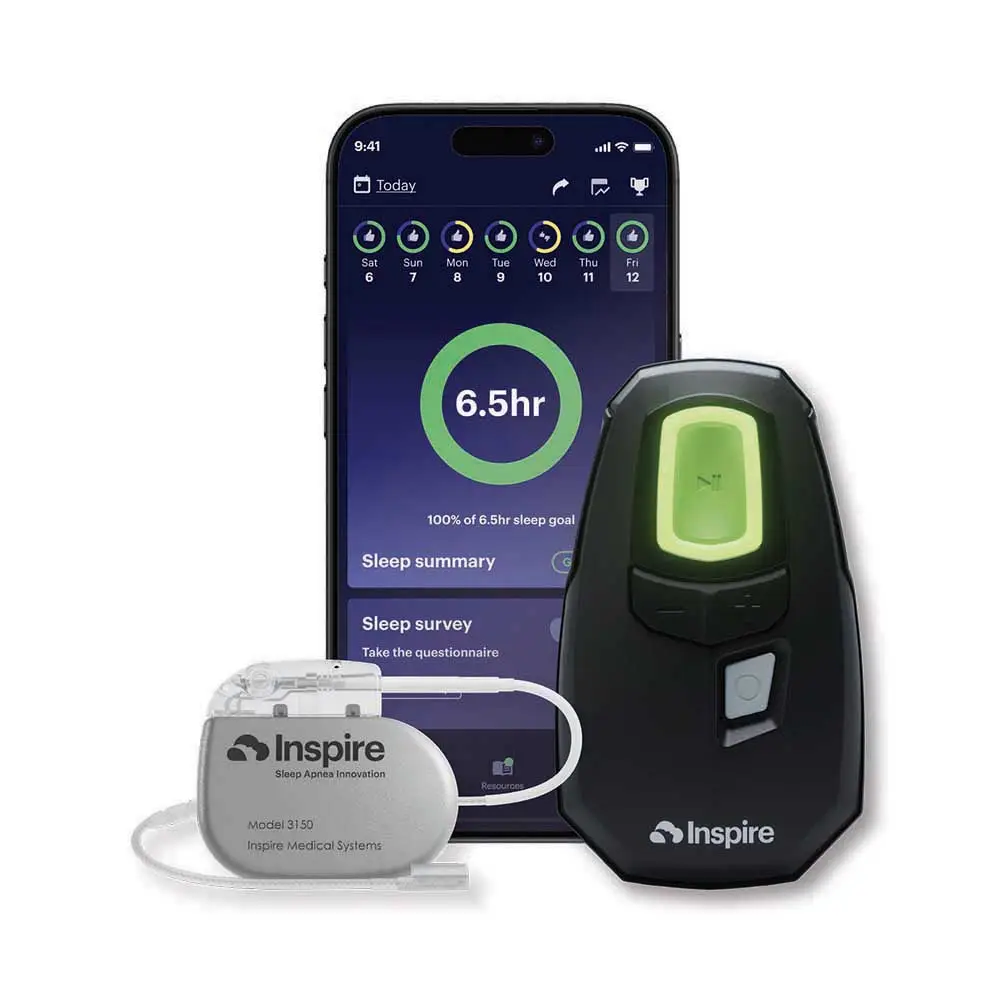
Staying updated included following the inception of Inspire® sleep therapy since it launched in 2014. An alternative form of fighting sleep apnea, Inspire® therapy involves placing a small implant near the collarbone in a short, outpatient procedure. “The Inspire® system has a generator that senses breathing while the patient is asleep,” Dr. Geraghty explains. “A stimulating cuff on the hypoglossal nerve allows the device to gently stimulate the tongue base in the correct timing cycle with the patient's breathing to open the airway. It turns on after a delay, which allows time for the patient to go to sleep. It can help patients by providing improvement or resolution of sleep apnea without the mask and machine.”
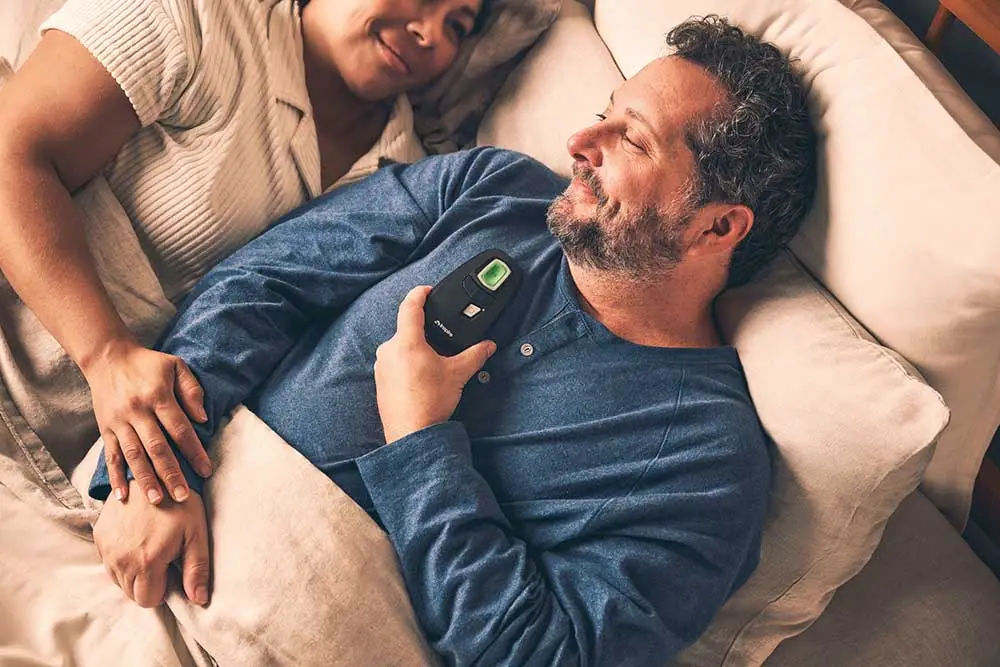
Although it is an implant, the Inspire® implant is not always on. Patients are equipped with a remote control that can activate the implant when they go to bed. In addition, using an app on their phone allows patients to keep track of their sleep and, in turn, they can share that data with their physicians.
Go Back to Sleep
Although the Inspire® sleep therapy implant might immediately sound like the right move for some people, it is not as simple as just scheduling an appointment with one’s doctor. There is a caveat. “The Inspire system will usually only be approved by health plans or Medicare for patients who have actually tried CPAP therapy,” Dr. Geraghty cautions, “and have demonstrated that they cannot use it effectively or receive enough benefit from it.”
In the 12 years since Inspire® first launched, Dr. Geraghty has personally performed more than 100 Inspire® implantations and seen their results. “I have been happy with the generally good results,” he assures, “and have had very few complications of the Inspire® implant operation.”
Good sleep is vital to good health. For those who suffer from obstructive sleep apnea, there is no need to spend one-third of your life fighting your own body to obtain good sleep. You have always had options to get that sleep you need, but now with Inspire®, your options have expanded and your hope to dream may be restored.
If the Inspire® therapy system does sound like it could be helpful to you or a loved one, contact Dr. Geraghty's Inspire Advisor at 309-886-6588 or visit www.inspiresleep.com to learn more.