
 By Jessica Pippin, LPC, The Able Center
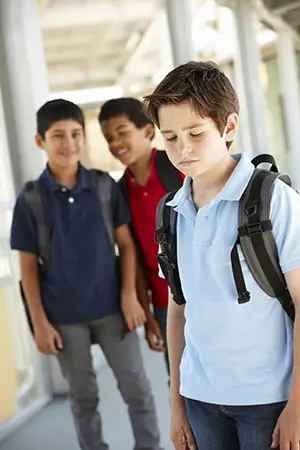
Bullying is a major issue for children today and an age-old concern of parents. Just what is bullying? The most common definition includes the words “intentional” and “aggressive.” Someone who intentionally harms another person through aggressive words or actions is a bully. There is also a focus on the imbalance of power that is required for bullies to find victims. Power, intentionality, and aggression are three key factors in identifying bullying.
Bullying can happen at any age, but is most common in grades 6 through 10. Male children are more likely to be physically bullied whereas female children tend to be emotionally bullied. However, with the growth of cyber bullying, male children are participating more and more in verbal and emotional bullying.
While the definition of bullying has not changed, the form in which children are bullied has. The frequency of bullying has remained relatively stable as well as the ages in which bullying is most common. The biggest change in bullying over the last few generations is the type of bullying that occurs.
Types of Bullying
There are four main types of bullying.
- Physical bullying includes any unwanted physical contact such as kicking, pinching, or inappropriate touch. Physical bullying also includes damaging someone else’s belongings, for example, destroying their cell phone.
- Verbal bullying is the traditional name-calling, teasing, and threats.
- Emotional bullying is more subtle than verbal bullying and can include rumors, exclusion, and making them feel unwelcome.
- Cyber bullying is a more recent development. This involves the use of instant messengers, social networks, and blogs to humiliate, ridicule, or manipulate another person.
The key players
There are three primary groups that are involved when discussing bullying: the bullies, the victims, and those that are both bullies and victims. Much of the research has shown that the bully and victims are the children that are at the highest risk. There are two other groups that are beginning to become the focus of intervention and prevention techniques: teachers and onlookers.
There are some misconceptions of what the school bully is like. Typically, in the media, you see a child that is bigger than everyone else, but has a soft side, picking on the weaker students. It is true that often bullies are larger than their peers, and it also appears that bullies tend to bully students that are younger than they are. However, the idea that bullies have low self-esteem, shown in the media by the crying reaction or a need to be loved, has not been proven by research. These bullies tend to be more average than previously believed.
A survey of children’s perception of bullying shows that the victims of bullying tend to be children who have a different appearance, or are small and weak. Victims of bullying also consider themselves to be less attractive than others. The victims of bullying are often portrayed in the media as the students that strike back violently in response to years of bullying. In reality, “most victims of bullying suffer in silence rather than retaliate” (Juvonen, 37). Often, the victims of bullying internalize their emotions resulting in depression, social anxiety, and decreased self-esteem.
A final group of children who are being impacted are those students who witness bullying on a regular basis. Students who may witness chronic bullying are being “victimized” by the presence of constant violence in their schools. Therefore, no child in the student body is safe from the effects of bullying.
Next month’s article will offer ways that parents and other adults can help.
The ABLE Center, founded by Dr. Jennifer Imig Huffman, uses an integrated team approach to offer comprehensive neuropsychological evaluations and assessment-defined intervention services to help your child or adolescent succeed. Dr. Huffman and her team have broad and extensive training in the evaluation and treatment of childhood neurodevelopmental conditions, including, Autism, Asperger’s, ADHD, learning disabilities, TBI and concussion, tic disorders, giftedness and twice-exceptional profiles (gifted and disabled), and emotional conditions. For more information, contact The ABLE Center in Bloomington, at 309-661-8046, or visit them online at www.theablecenter.com.