

Submitted by Doug Leone, MD and Adrienne Schupbach, MD, Dermatology and Mohs Surgery Institute
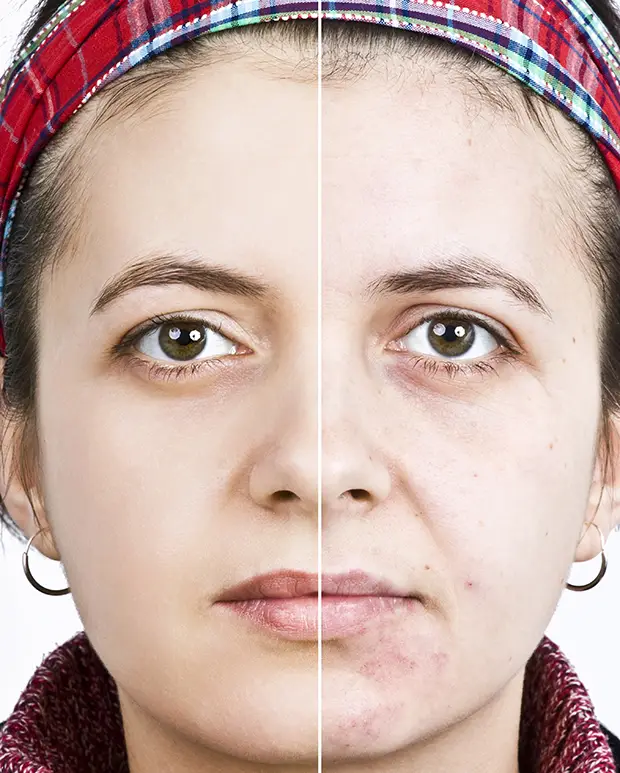
Most people who suffered from acne in their teens can file it away with the rest of their teenage memories. For some, acne leaves behind scarring that continues to cause emotional and psychological anguish. Everyone wants to put his or her best face forward, regardless of age or occupation, but what if you are now dealing with the spots and scars that acne left behind?
First of all, don’t confuse the reddish-brown marks that often follow an acne outbreak with a true acne scar. The darker spots are the result of inflammation, and while they may stick around for months, they will eventually go away. True acne scars will not go away without treatment. Fortunately, there are many effective treatments for minimizing or even eliminating acne scars and dark spots. Consider the following ways you can welcome spring with clear, smooth skin.
Chemical peels
Chemical peels can improve the look of a variety of skin imperfections, from acne scarring to sun damage. There are many different types and strengths of peels. Your dermatologist will evaluate the type and extent of scarring and choose the chemical mixture that will address your specific needs. While some over-the-counter products are available, these products are typically very low concentrations and are less effective.
Light therapy
Microdermabrasion and light therapy are better used as a treatment for acne rather than as a method for scar removal. However, if acne is controlled in the first place, then there is less risk of subsequent scarring. Light therapy is a newer option that is becoming more widely used for many skin conditions.
Dermal fillers
There are many different kinds of dermal fillers that can be injected into the skin to “plump up” shallow acne scars. Fillers make the surface of the skin smoother and the results are immediate. However, they do not last forever, so treatment is needed every three to 12 months, depending on which type of filler is used.
Punch excisions
Acne commonly produces what is known as an “ice pick” scar because it is very deep but not very wide. A dermatologist can use a small cookie-cutter like tool to remove the scar, then close it up with a very small stitch. When the stitch is removed, the remaining scar will fade and be less noticeable and more responsive to other resurfacing techniques.
Lasers
Lasers are effective for treating many different types of skin issues and there are numerous laser devices available with more being introduced every year. There are two main categories of lasers used to treat acne scars. Ablative lasers are more invasive and remove the outer layer of the skin. They are very effective, but skin takes about a week to heal and you must be diligent about post-treatment care to prevent infection.
Non-ablative lasers do not remove the outer layer of skin, but instead work under the layer of skin to stimulate collagen growth. When the cells regenerate, the skin will be smoother and scars less noticeable. This type of laser treatment is less aggressive and easier to tolerate, but six treatments are usually needed for best results.
Micro-needling
One of the newest treatments for scarring is micro-needling. A small, handheld device covered with many tiny, closely spaced needles breaks up the scar tissue and simulates the growth of new tissue. This process is relatively painless and gives excellent results with very little down time. It is important to note that there are do-it-yourself skin needling kits available, however, these are different than those used by professionals. The at home “rollers” are not only risky, but not nearly as effective.
What’s best for you?
There are many different types of acne scars and, of course, each person’s skin and situation is unique. Therefore, there is not a single “best” treatment for acne scars. In fact, the “best” treatment is often a combination of various therapies including lasers, sometimes more than one type, surgical techniques, and fillers. With so many treatment options available, there is no reason why anyone should have to live with acne scars.
For more information, you may contact the Dermatology and Mohs Surgery Institute at 309-451-DERM (3376) www.dermatologistbloomington.com. Dr. Leone and Dr. Schupbach, both residents of Bloomington, are board-certified dermatologists, specializing in medical and cosmetic dermatology, including the treatment of skin cancer, moles, acne, rashes, warts, and all skin disorders. Dr. Leone is one of the few Mohs-trained surgeons in the area. Their office is located at 3024 E. Empire St. 2nd floor (in the Advocate BroMenn outpatient center).