

By Joen Lane, Ideal Family Weight Loss & Life Balance Center
There is no vaccine for one of the most dangerous, life-threatening diseases facing children today: obesity. While the mortality rate for children doesn’t compare to the rate for adults who die from the side effects of obesity, the long-term health issues for these children as they mature into adulthood is staggering. At the rate of acceleration, we just may outlive our children.
Penn State, home to The Center for Childhood Obesity Research (CCOR), states that obesity in children is even higher for economically disadvantaged children. Most of the studies link a combination of genes, epigenetics, the intrauterine environment, and early life influences to whether or not a child is likely to be obese. Studies currently underway at Florida State University on the growing segment of obese Mexican American boys zeros in on an accurate outcome: obesity in childhood often leads to severe adult obesity. Numbers in each study reveal similar statistics, stating that obesity in adulthood costs the country an estimated total of $147 billion (in 2008) because it increases the risk of coronary heart disease, type 2 diabetes, certain cancers, and other conditions. The State of Obesity is an organization that gathers data and creates better policies for a healthier America. According to the most recent data released in September 2015, rates of obesity now exceed 35 percent in three states. Illinois wasn’t included in this top 10 list; yet, the highest rates of obesity occur in the South and Midwest.
There is not a lack of data about this problem. What is lacking are massive initiatives to pass legislation for better food growing, manufacturing, and processing practices. Funding is still available to study the problem, yet funding for education and programs for families across America is lacking. State by state, people are seeking answers; however, there is a long way to go. In February of 2010, Illinois formed the Illinois Alliance to Prevent Obesity. Their goal is to “ensure that trends in obesity in Illinois are stable by 2015 and moving downward by 2018 through promotion and adoption of nutrition and physical activity policy and environmental change interventions.”
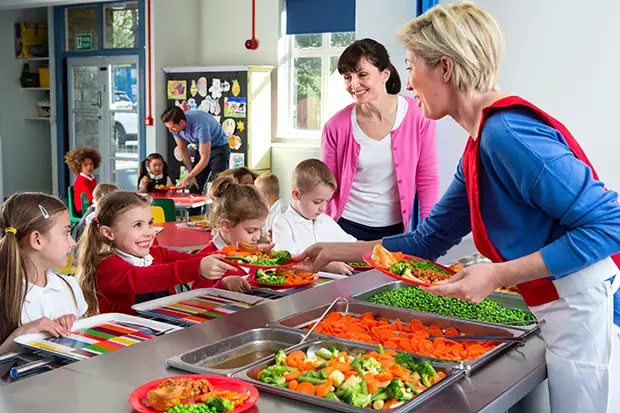
As part of their long-term roadmap, they have included a workgroup to address childhood nutrition and physical activity in educational settings. These include directives in nutrition for school meals and competitive foods, including celebrations, rewards, school fundraising, and after-school programs. Requirements for such foods would meet the Institute of Medicine guidelines. They would like to establish a baseline measure for compliance with Illinois daily physical education instructional requirement and oppose legislative attempts to weaken existing physical education requirements. In already taxed classrooms where students outnumber teachers 30 to 1, they would like to promote and implement comprehensive and appropriate K–12 curricula to teach students the skills and knowledge necessary to establish and sustain a healthy lifestyle and provide support for advocacy efforts at the local level.
Health education classes, enhanced physical education, and promotion of healthy food options are used in all 50 states. Examples include programs such as SPARK and Eat Well and Keep Moving. Budget cuts remain the challenge in the sustainability of any given program. Cuts continue in all of the extracurricular programs, including physical education programs. Compounding the problem is the fact that technology dominates the attention of our youth, and the physical “play” factor that most baby boomers had as children is nonexistent. Although participation in sports and organized physical activity is increasing, this still doesn’t translate into a physically active lifestyle. Can you begin to understand the demise of our children’s health?
If you missed last month’s article on childhood obesity, you may read it online at www.HealthyCellsBN.com, or contact Cheryl Eash at 309-664-2524. Next month’s article will offer some possible solutions to this increasing problem in America.
Joen Lane is a certified weight loss coach with Ideal Family Weight Loss & Life Balance Center, offering Ideal Protein, the medically developed, sensible weight loss protocol. The center is located at 2103 E. Washington Street in Bloomington. Their mission is to help people take control of their weight and keep it off. Classes are offered on a variety of food and lifestyle topics. For more information, please call 309-661-3235.
Photo credit: SolStock/iStock, Christopher Futcher/iStock