

By Ira Halperin, DO, Medical Director and Heather Hawkins, RN, BSN, Program Director OSF Wound Care Clinic
Do you or someone you know have any non-healing wounds? You’re not alone. In the United States, chronic wounds affect 6.7 million people and the incidence is expected to rise at two percent annually over the next decade.
An aging population and increasing rates of diseases and conditions such as diabetes, obesity, and the late effects of radiation therapy contribute to the chronic wound epidemic. Untreated, chronic wounds can lead to diminished quality of life and possibly amputation of the affected limb.
Wound care treatment options include negative pressure wound therapy, bio-engineered tissues, biosynthetic dressings, growth factor therapies, and the recent addition of Hyperbaric Oxygen Therapy (HBOT). Conditions treated include, but are not limited to the following:
- Diabetic wounds of the lower extremities
- Pressure ulcers
- Soft tissue radiation injuries
- Necrotizing infections
- Compromised skin grafts and flaps
- Burns
- Osteomyelitis
- Lymphedema
- Malignant wounds
- Venous leg ulcer
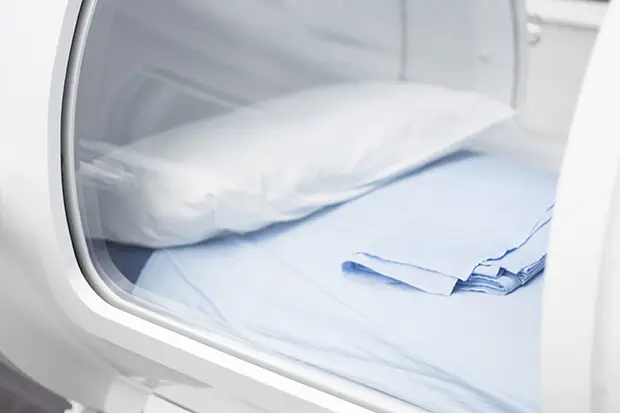
Hyperbaric oxygen therapy is a type of treatment used to speed up healing of carbon monoxide poisoning, gangrene, stubborn wounds, and infections in which tissues are starved for oxygen. If you undergo this therapy, you will enter a special chamber to breathe in pure oxygen in air pressure levels higher than average. The goal is to fill the blood with enough oxygen to repair tissues and restore normal body function.
HBOT helps wound healing by bringing oxygen-rich plasma to tissue starved for oxygen. Wound injuries damage the body’s blood vessels, which release fluid that leaks into the tissues and causes swelling. This swelling deprives the damaged cells of oxygen, and tissue starts to die. HBOT reduces swelling while flooding the tissues with oxygen. The elevated pressure in the chamber increases the amount of oxygen in the blood. HBOT aims to break the cycle of swelling, oxygen starvation, and tissue death.
Hyperbaric oxygen therapy was first used in the United States in the early 20th century. Today, it’s used to treat sick scuba divers and people suffering from carbon monoxide poisoning, including firefighters and miners. It has also been approved for more than a dozen conditions, ranging from burns to bone disease and including the following:
- Carbon monoxide poisoning
- Cyanide poisoning
- Crush injuries
- Gas gangrene (a form of gangrene in which gas collects in tissues)
- Decompression sickness
- Acute or traumatic inadequate blood flow in the arteries
- Compromised skin grafts and flaps
- Infection in a bone (osteomyelitis)
- Delayed radiation injury
- Flesh-eating disease (also called necrotizing soft tissue infection)
- Air or gas bubble trapped in a blood vessel (air or gas embolism)
- Chronic infection called actinomycosis
- Diabetic wounds that are not healing properly
Access to this treatment gives patients with chronic non-healing wounds another option or chance of saving a limb. Hyperbaric oxygen along with adjunctive wound therapies can decrease wound healing time for chronic wounds that would otherwise go unhealed.
The OSF Wound Care Clinic has been serving the Bloomington area for 10 years. In December 2016, it partnered with Healogics Inc., joining a network of nearly 800 Wound Care Centers nationwide. The clinic is in the process of installing two of the largest, most advanced hyperbaric oxygen chambers with expanded size that allows for comfortable treatment of patients up to 700 pounds, as well as patients who suffer from claustrophobia. Call (309) 661-6230 to make an appointment with the OSF Wound Care Clinic, 1701 E. College Ave., Bloomington.