
http://houskadentalcenter.com./ By Amy Kennard
Piercings aren’t just for ears anymore. In keeping with the current popular trend, individuals are choosing to pierce many other parts of their body. Particularly favored among teens and young adults, piercings have gained popularity because they are considered fashionable, a way to express one’s individuality, or even as a response to a peer challenge or dare.
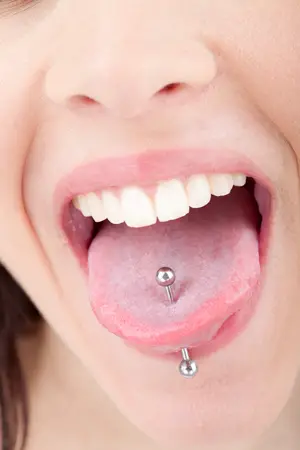
While all piercings include some risk, oral piercings have some of the highest percentages of problems. Oral piercing sites include the lips, cheeks, mouth, and most commonly, the tongue. The rise in oral piercings has caused concern by many health professionals, including dentists, for a variety of reasons.
A Bacterial Breeding Ground
Because the mouth harbors millions of bacteria, infection is a common problem with oral piercings. Symptoms of infection can include pain and swelling, which can lead to speech or breathing issues. If untreated, serious conditions can occur including the possibility of an obstructed airway or sepsis, which is a serious condition in which the infection spreads to the bloodstream.
Devon had her tongue pierced ten years ago, but removed it when she met her current husband. “When I first got it done, my tongue was so swollen I never thought I’d lick my lips again,” she said. “Luckily, that did go away, but I had to be careful about biting it when I was eating. The fact that I didn’t chip a tooth is a miracle!”
In fact, chipped or cracked teeth are common reasons why many oral piercing patients end up in the dentist’s chair. Another reason is gingival recession (gum recession), when the post or button of the stud hits and rubs against the gum tissue, causing the tissue to recede over time.
“In addition,” says Dr. Mark Houska, a local dentist. “Piercings can be a problem during dental examinations and the taking of X-rays, which can adversely affect your dental care.”
Not Recommended, But…
Both the American Dental Association and the American Academy of Pediatric Dentistry oppose the practice of oral piercing and support legislation requiring parental consent for minors who want piercings because of the potential for infection and other complications. Current law in Illinois states that anyone who pierces the body of a minor under age 18, without written consent of the parent or legal guardian, commits a Class C misdemeanor.
If you do decide to have an oral piercing, dentists recommend choosing a piercing studio with a valid, current health certificate and which utilizes hospital-grade sterilization techniques or disposable instruments. After the piercing area has healed, remove the piercings each time you eat, sleep, and even during strenuous exercise. If your tongue is pierced, brush it just as you brush your teeth. Use an antiseptic mouthwash after every meal to reduce bacteria. Finally, oral piercing jewelry should be made of 14 or 18 karat gold. Avoid costume jewelry containing nickel due to possible allergic reactions. “I also highly recommend consulting your dentist if you are considering an oral piercing,” Dr. Houska says. “If you’re determined to get one, he or she can advise you regarding risks and proper care of the site to lessen your chances of problems in the future.”
For more information or to schedule a personal consultation, please call Houska Dental Center at 309-662-9042 or visit them online at www.HouskaDental.com. They are located at 2433 Maloney Dr. in Bloomington and offer 25 years of exceptional dental care to the Bloomington-Normal area with expertise in general and cosmetic dentistry.
Photo credit: rothivan/iStock