
 By Alexander Germanis
Taking things for granted is part of human nature. When we turn the knob on the faucet, we expect water to come out. When we adjust the thermostat, it is surmised that the furnace or central air will accommodate us.
Similar feelings extend to expectations of healthcare. With the onset of a cold, a simple trip to the drugstore can bring some degree of relief. And when a toothache wakes us in the middle of the night or we think we may have chipped a tooth, it takes little more than a phone call, and we know a dentist will set us right again—sometimes the very day we experience the discomfort.
Unfortunately, there are many people who do not—cannot—experience that level of certainty when it comes to their health. Just southeast of Cuba, the island nation of Haiti is filled with many such people.
In the mid 1980s, a man named Richard Hammond and his wife, Barbara, were vacationing and relaxing on the Caribbean island. But when they wandered off the beaten path, as it were, straying from the bright and glamorous resort areas, the real Haiti unfolded before them.
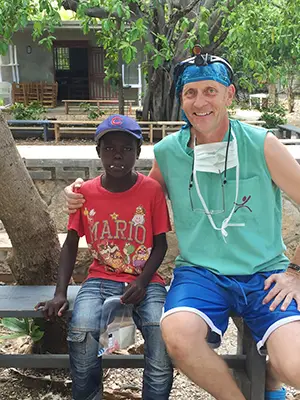
Dr. Stephen Doran, DMD, of Doran, Capodice, Efaw and Ocheltree, LLC in Bloomington, continues the story: “When this gentleman and his wife saw how destitute the people were away from the tourist areas,” he says, “they sold everything they had, changed their lives, and opened up a medical clinic in Haiti.”
The organization Friends of the Children of Haiti (FOTCOH) was then formed, based upon a philosophy of altruism—those who have much to give, giving to those who have little or nothing at all.
The one thing the people of Haiti stand in need of, more than anything, is decent, reliable, accessible healthcare. That is why Dr. Doran, an accomplished maxillofacial surgeon, hearkened to an imploring friend of his. “Sharon Hoy, a nurse and operating room supervisor, had been going down there for some time and had been after me to go, too,” the doctor shares. “She thought I would be a good fit if I went down there to do oral surgery.”
“After the earthquake in 2010, it was obvious that somebody had to help,” he continues. “My kids were pretty much done with school, and I decided it was my time.”
Making his first trip in 2011, Dr. Doran has been going twice a year ever since, giving up a month of each year to bring medical care to the Haitian people.
“I grew up in a household where we were taught to give back,” he discloses. “My father was a truck driver, and he drove on weekends for the Midwest Food Bank; he did that for a number of years. My parents instilled that philosophy in all of us.”
The more times Dr. Doran makes the trip to the island, the more he has come to realize the philosophy of altruism has, in practice, become a philosophy of reciprocity.
“The Haitians do way more for me than I do for them,” Dr. Doran explains. “I come back a better doctor; I’m a better person after every clinic. Seeing them and seeing what they’re going through has changed my perspective on life—for the good.”
To learn more about the conditions in Haiti and the people who work tirelessly to bring better healthcare to them, read “Healing Haiti, Part 2” in next month’s Healthy Cells.
Photo courtesy of Doran, Capodice, Efaw & Ocheltree, LLC