
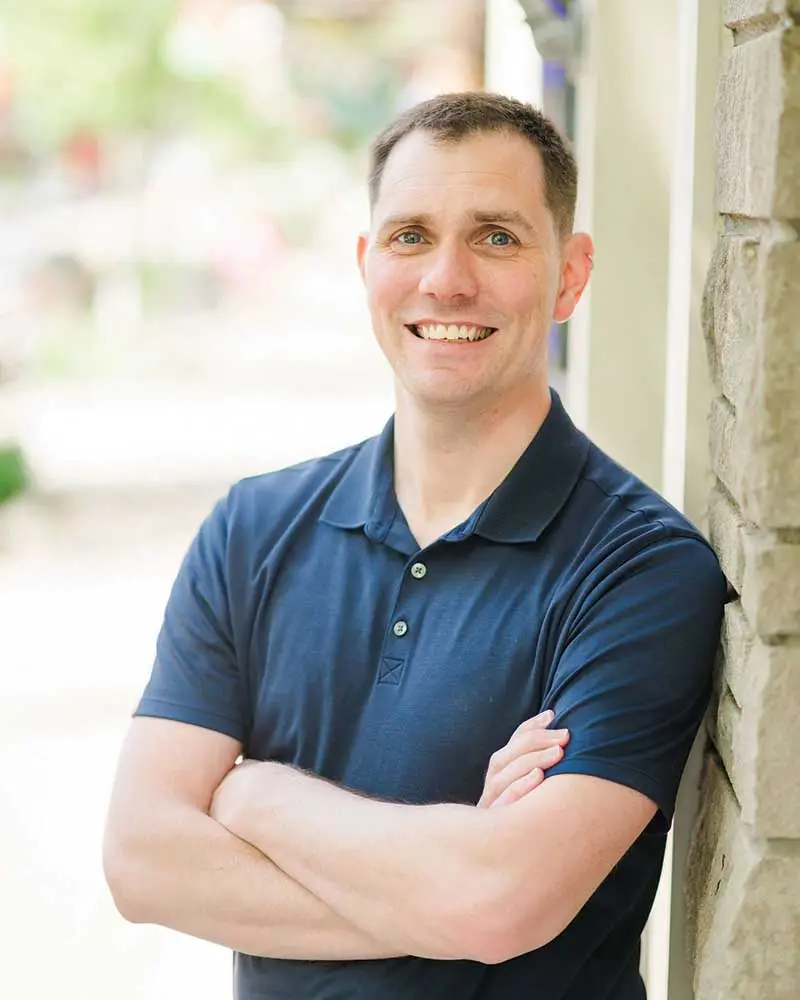
Submitted by Chestnut Health Systems
Bryan Hinman has built a career around helping people change their lives. At Chestnut Health Systems™, his work combines compassion, advocacy, and accountability to support individuals in recovery while helping shape the next generation of behavioral health professionals.
The ability to make an impact has guided Hinman from the beginning. “Compassion has always been a centerpiece for me. Especially in my first year at Chestnut, I found that a lot of clients don’t have any advocates — they don’t have a voice,” said Hinman. “Being an agent of change, to give them new and positive experiences of the court system and treatment, to make them feel heard, is a big piece of why I do what I do.”
Now serving as Associate Director of Court Treatment Programs at Chestnut, Hinman oversees Chestnut’s involvement with the McLean County Drug Court and Recovery Court Programs. The courts are multi-disciplinary programs that bring together members from law enforcement, the state’s attorney’s and public defender’s office, judiciary, probation, jail staff, and others. Chestnut serves as a behavioral health treatment provider within the team, offering counseling and substance use treatment services.
These programs, known as problem-solving courts, take a restorative approach to justice. Rather than focusing on punishment, problem-solving courts address the root causes of criminal behavior, such as substance use or mental health challenges, combining accountability with treatment and support.
“No two days are the same,” he said. “It's often chaos, and it keeps you on your toes. But at the end of the day, it's about helping people change their behavior to move into a recovery-oriented lifestyle.”
Extending Impact Beyond the Courtroom
While Hinman's work directly supports individuals in recovery, his influence extends well beyond the courtroom. Through a partnership with Illinois State University (ISU), he regularly shares his professional experience with psychology and social work students, helping them better understand the realities of behavioral health and the justice system.
To bring lessons to life, Hinman often invites participants in the final phase of a problem-solving court program to speak with students.
In these programs, participants progress through five phases that support recovery and accountability. In phase one, participants complete the necessary assessments and begin treatment. As they advance, they begin to strengthen coping skills, build relationships, and establish plans to prevent future use and remain abstinent from substances. By phase five, participants are nearing graduation from the program and preparing for reintegration into their community.
“Phase five clients are ambassadors for the court,” Hinman explained. “They've been through the process, they've grown, and they want to share their story.”
By hearing directly from individuals in recovery, students gain a deeper understanding of the challenges people face and the transformational power of support, treatment, and advocacy. These experiences have inspired some students to pursue careers in behavioral health and the court system.
The Power of Advocacy
One of Hinman’s most memorable experiences involved a participant who entered the program with a negative reputation for having an attitude and a violent past. “In court, he wouldn’t make eye contact or speak,” Hinman said. “But once we looked closer, it wasn’t attitude, it was fear. It was trauma.”
After months of therapy, that client not only found his voice, but used it to inspire others. He began presenting with Hinman at ISU, and eventually, within six months of being in the program, gave a presentation at the courthouse about his experiences. “It’s a reminder of the power of the problem-solving courts and advocating for the client.”
Building Strong Teams and Strong Communities
Within Chestnut, Hinman is known for fostering growth and collaboration. Being a certified trainer through the Administrative Office of the Illinois Courts, he focuses on helping staff build confidence in their skills to create a supportive environment where everyone can learn and thrive as a team.
The work can be challenging, though, so to stay grounded, Hinman maintains healthy work boundaries, volunteers in the community, and spends time with friends over “copious amounts of board games.”
Additionally, Hinman is a board member of the Prairie Pride Coalition in Bloomington, IL, an organization dedicated to equality for the LGBTQIA+ community. “I use that platform to create safe spaces, advocate, and educate about the needs of the LGBTQ+ community.”
Continuing to Make a Difference
Whether helping clients navigate recovery, mentoring students, or supporting colleagues, Hinman's work is rooted in the belief that everyone deserves the opportunity to grow and thrive. His career reflects a commitment to compassion, connection, and creating pathways for positive change that extend throughout the community.
When asked what advice he’d give to someone beginning a career in behavioral health, Hinman says, “Stumble in a healthy way and be open to new experiences. Even if something doesn’t work out, you’ve learned something valuable, and that’s how you grow.”
Chestnut Health Systems offers primary care, behavioral health, dental, and recovery services. Call 888-924-3786 or visit www.chestnut.org for more information.